ISR Project Funded to Detect Mars Craters Using AI

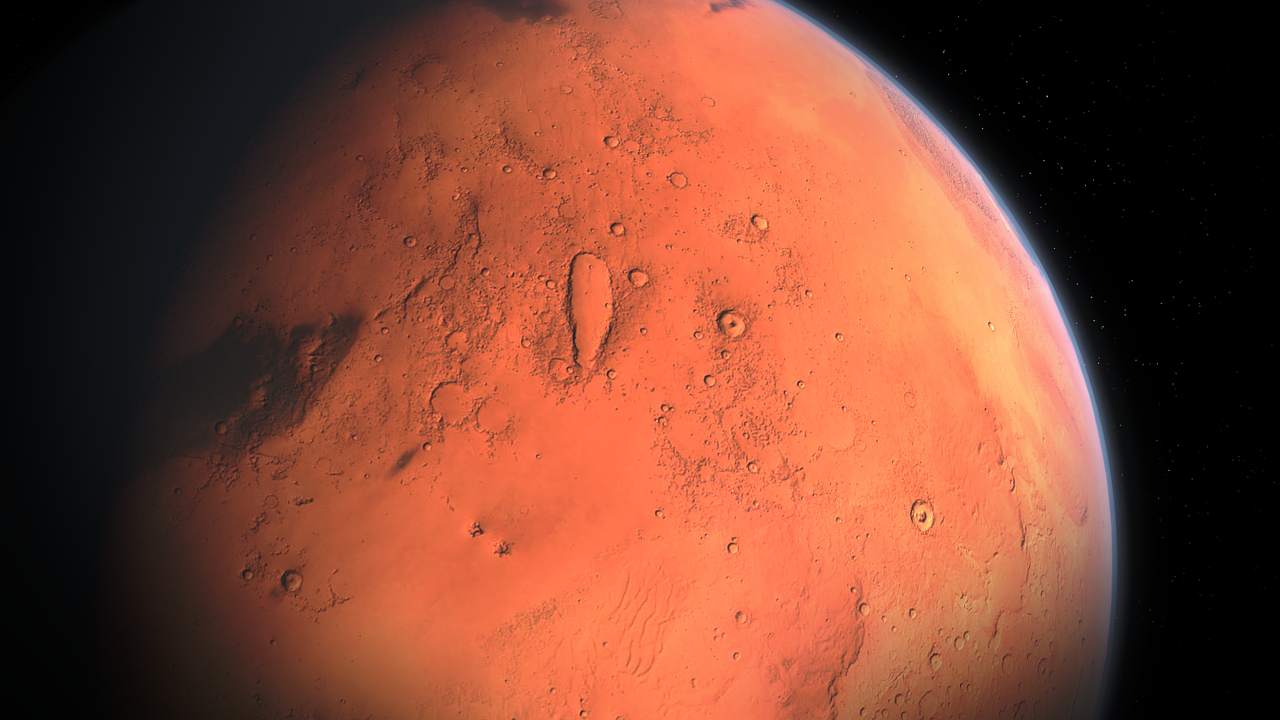
PT Space announced the winners of the 2024 PROSSE initiative and one of the selected projects, UNFORSEEN, iwas composed by ISR|Lisboa researchers. It aims to revolutionize crater detection on Mars using unsupervised deep learning, eliminating the need for extensive annotated data. Principal Investigator Margarida Silveira highlighted the significance of craters for understanding Mars' geology.
Portuguese Space Agency (PT Space) has announced the winners of the 2024 edition of PROSSE – PROdex for Science in Space Exploration, a prestigious initiative aimed at funding scientific projects in the field of space exploration in Portugal. Two research projects emerged as selected to receive financial support to advance their groundbreaking research, which includes an ISR-Lisboa-led project.
UNFORSEEN, the project proposed by the Institute of Systems and Robotics (ISR|Lisboa) at Instituto Superior Técnico, aims to revolutionize the detection of craters on the surface of Mars. This project uses unsupervised deep learning techniques to overcome the limitations of current supervised models, potentially leading to significant advancements in planetary exploration.
Margarida Silveira, Principal Investigator, explained the rationale behind the UNFORSEEN project: “The vast majority of current approaches to crater detection require large amounts of annotated data for training, which is extremely time-consuming. The availability of much larger amounts of unannotated data allows the exploitation of unsupervised methods for the automatic detection and localization of craters. This is important since impact craters are an essential source of information about the geology and surface of Mars, and their accurate detection is also crucial for determining the characteristics of asteroid and meteoroid populations.”
The two projects will now move forward to the contractual phase with ESA’s PRODEX team. The other funded project is focused on mitigating muscular loss in astronauts, which can also be applied in the field of population aging. Both projects will receive funding and international support. “The technical expertise and oversight provided by ESA’s specialists are crucial to ensuring the successful implementation of these projects,” emphasized Marta Gonçalves, Scientific Program Manager at the Portuguese Space Agency.
Share the Post:

Related Posts

Two ISR Teams Qualify for RoboCup 2026

The SocRob@Home project is bringing not one but two teams to RoboCup 2026, taking place from June 30 to July 6 in Incheon, South Korea. It will be the first time the competition, known as the “world’s premier robotics”, has ever been held in Asia

Read More

Partnership with Champalimaud Foundation to advance neurorobotics

Instituto Superior Técnico and Fundação Champalimaud have formalised a new strategic collaboration to create a Neurorobotics Laboratory, reinforcing the central role of ISR-Lisboa in cutting-edge interdisciplinary research. Signed on 18 February, the Memorandum of Understanding establishes a long-term framework for scientific, technological, and training cooperation, with the new lab to be integrated into the Neurotechnology Warehouse at the Champalimaud Foundation.

Read More